CV for Construction Worker in Ireland 2026
Ireland's construction sector added new work permit categories in May 2026, opening the door for non-EU tradespeople to fill critical shortages in bricklaying, plastering, steel fixing, and shuttering. BAM, John Sisk, and Mercury Engineering are actively recruiting from abroad. Salaries range from €35,000 to €55,000 depending on trade and certification level. But even experienced tradespeople get filtered out because their CV does not mention Safe Pass, CSCS cards, or use the terminology Irish construction recruiters scan for. This guide shows you how to format a construction CV that passes Irish ATS systems and gets you onto site.
What does a construction worker earn in Ireland in 2026?
Construction workers in Ireland earn between €35,000 and €55,000 per year in 2026, with skilled tradespeople (electricians, plumbers, crane operators) commanding €50,000–€70,000. The Sectoral Employment Order (SEO) sets minimum hourly rates for the sector:
- General operative: €35,000–€40,000/year (€17–€19/hr)
- Skilled tradesperson (carpenter, bricklayer, plasterer): €42,000–€55,000/year
- Electrician (qualified): €50,000–€65,000/year
- Crane operator: €55,000–€70,000/year (CPCS/CSCS required)
- Site foreman/supervisor: €55,000–€75,000/year
- Overtime: widespread in construction. Saturdays at time-and-a-half are standard.
Key employers: BAM Ireland, John Sisk & Son, Mercury Engineering, Jones Engineering, Walls Construction, Designer Group, and Clancy Construction. Recruitment agencies: CLS Recruitment, Elk Recruitment, Noel Recruitment.
What CV format works for construction in Ireland?
Large construction firms (BAM, Sisk) use Workday or SAP SuccessFactors. Smaller contractors and agencies accept emailed PDFs. Either way, your CV must be clean, single-column, and front-load your safety certifications:
- Length: 1–2 pages. Trades CVs are typically shorter — one strong page is ideal.
- Sections (in order): Contact details → Trade/Role → Safety cards → Work experience → Plant/equipment tickets → Education
- Safety cards at the top: Safe Pass and CSCS cards go ABOVE work experience. Recruiters check these before reading anything else.
- No photo, no PPS number — standard Irish format. Mention Stamp 4 or work permit eligibility.
- File format: PDF. Filename: Firstname-Lastname-Trade-CV.pdf
How to describe construction experience on your CV
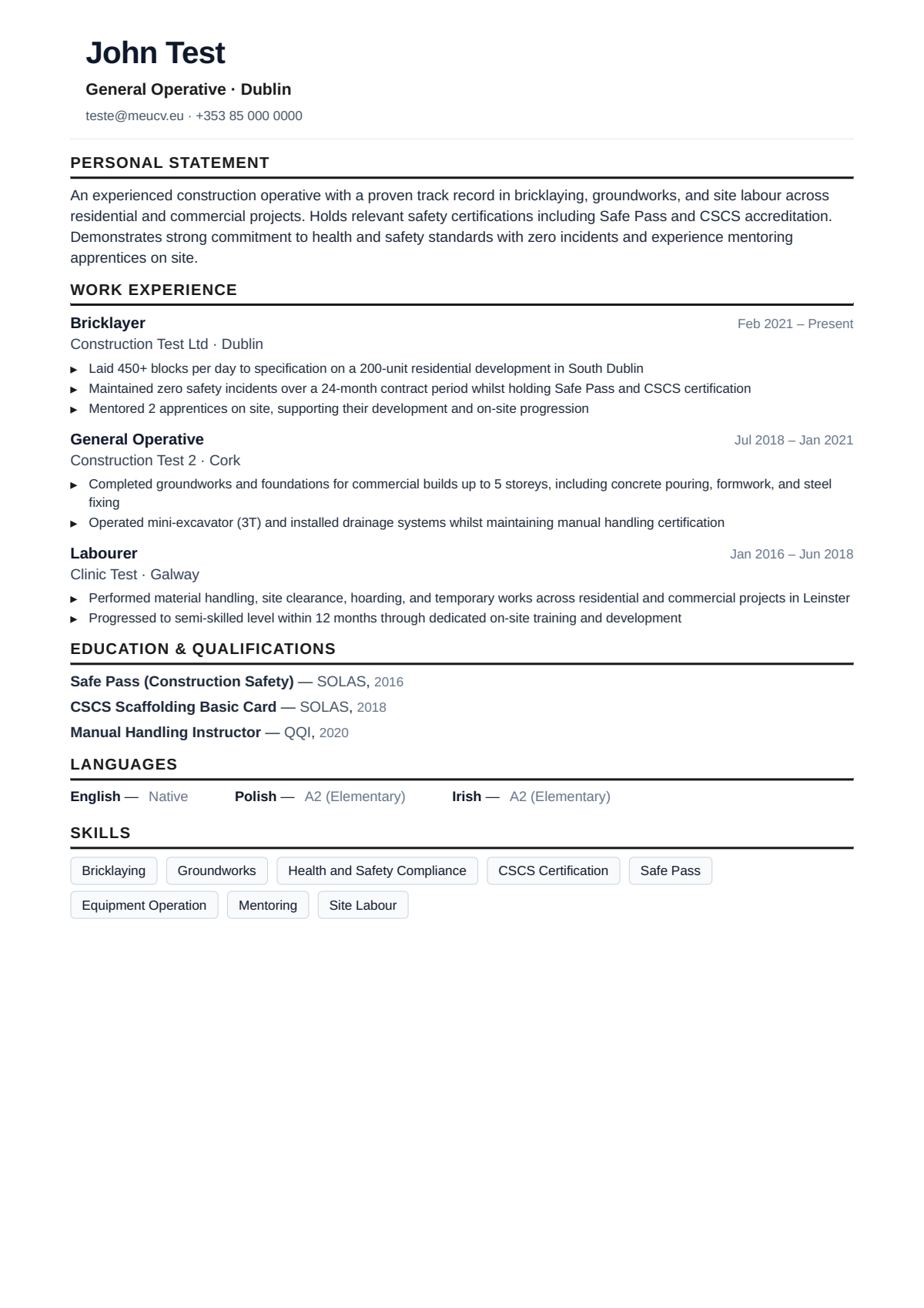
Irish construction recruiters want to see project scale, your specific role, and safety compliance. Use this format for each role:
Before (weak): "Worked as bricklayer on building site." After (strong): "Bricklayer on €45M residential development (BAM Ireland, Cherrywood), laying 400+ blocks/day across 3 apartment blocks. Zero safety incidents over 14-month contract. CSCS Advanced Scaffolding card holder."
Before (weak): "Did electrical work in factory." After (strong): "Qualified electrician responsible for 3-phase installation across 12,000 sqm pharmaceutical facility (MSD Carlow). Worked to IS 10101 standards. Completed project 2 weeks ahead of schedule."
Mention project value (€M), building type (residential, commercial, pharmaceutical, data centre), client name where permitted, and duration. Irish construction runs on reputation — named projects carry weight.
Which safety cards and certifications do you need?
You cannot legally step onto an Irish construction site without a Safe Pass card. Beyond that, CSCS (Construction Skills Certification Scheme) cards prove competence in specific trades and plant operation:
- Safe Pass — mandatory 1-day course (€180). Valid for 4 years. Without it, no site access anywhere in Ireland.
- CSCS Registration Card — proves you completed a SOLAS-approved apprenticeship or trade qualification.
- CSCS Experienced Worker Card — for workers with 3+ years verified experience but no formal Irish apprenticeship.
- CSCS Plant Operator Cards — required for excavators, dumpers, telehandlers, cranes. Each machine needs a separate card.
- Manual Handling — separate from Safe Pass. Required for most physical site roles.
- Working at Heights — required for scaffolding, roofing, and steel erection work.
If you trained abroad, contact SOLAS to check if your qualifications map to an Irish CSCS card. Many EU trade qualifications transfer directly under mutual recognition agreements.
5 errors that get your construction CV rejected
- Missing Safe Pass expiry date — if your Safe Pass is expired or missing, recruiters assume you cannot start immediately. Always include the expiry date.
- No CSCS card details — list card type, registration number, and expiry. Recruiters verify these before offering contracts.
- Vague project descriptions — "worked on building site" is useless. Name the project, value, client, and your specific trade contribution.
- Including personal photos or PPS numbers — data protection breach in Ireland. Never include these.
- Not mentioning work permit status — if you are non-EU, state clearly that you are eligible for a General Employment Permit or hold Stamp 4.
Your next step: get your construction CV right
Ireland is building housing, data centres, and infrastructure at a pace not seen since the Celtic Tiger. If you have trade skills and safety cards, the work is there. Your CV just needs to speak the language Irish construction recruiters understand.
MeuCV builds construction CVs with your safety certifications front and centre, project details formatted correctly, and trade-specific vocabulary that ATS systems scan for. Takes 5 minutes. Costs €5.99.
Lê também
Healthcare, hospitality, warehouse, retail, delivery, cleaning, and care work lead Ireland's job vacancies in 2026. Salaries, demand data, and how to apply.
CV for HGV Driver in Ireland 2026Write an HGV driver CV for Ireland with Driver CPC, ADR cert, and tachograph compliance. Salary data, employer list, and ATS formatting guide.